Kumari Kandam

The Lost Tamil Continent

Introduction to Kumari Kandam

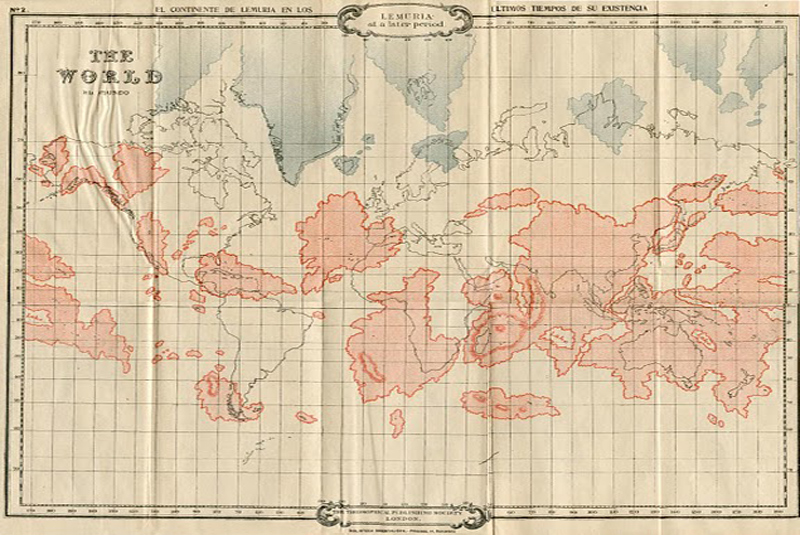
Kumari Kandam is a legendary lost continent deeply rooted in Tamil mythology, literature, and nationalist thought. It is often associated with the myth of Lemuria, a hypothetical submerged landmass in the Indian Ocean. Kumari Kandam holds a profound place in the Tamil cultural imagination as the cradle of the ancient Tamil civilization, which was supposedly lost to the sea.

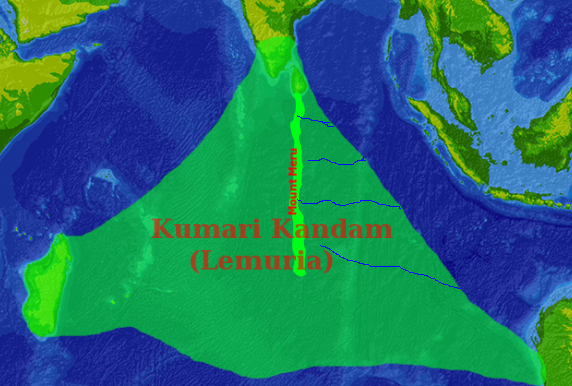
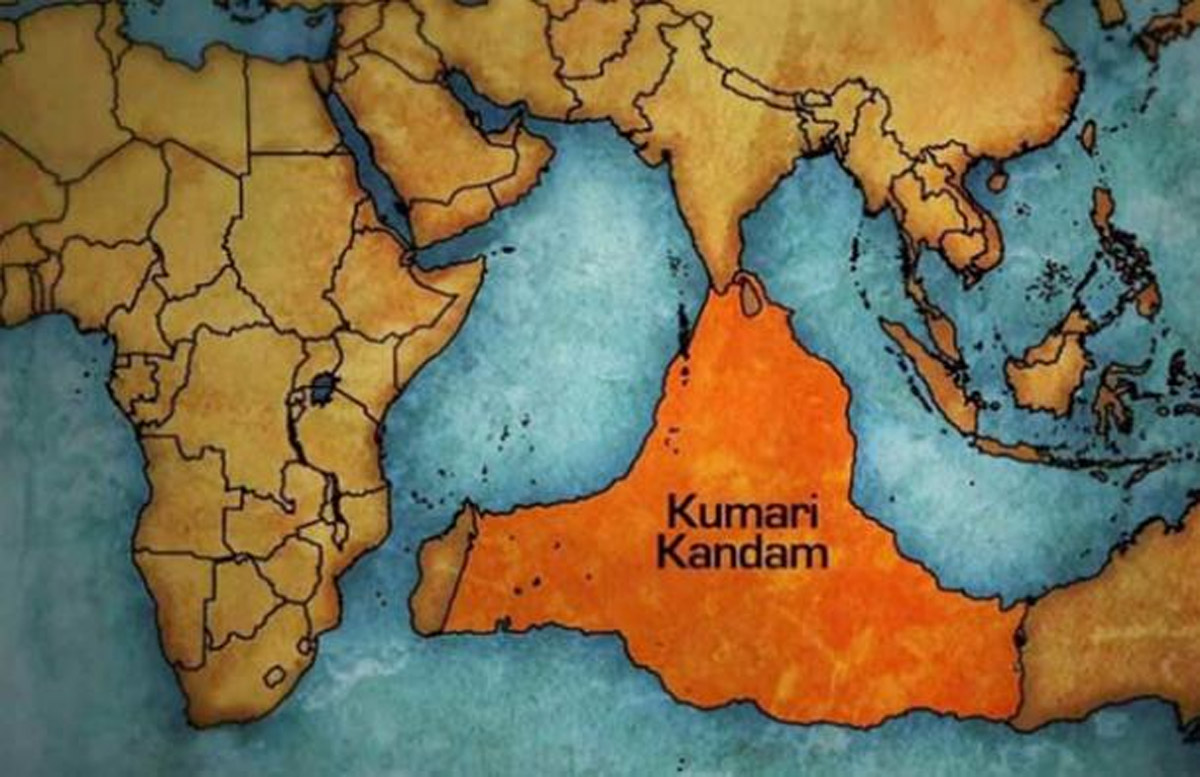
According to Tamil legends, Kumari Kandam was a vast continent that extended far south of present-day India, encompassing a large area of the Indian Ocean. It was said to be the home of the First Sangam, a literary academy where poets, scholars, and philosophers gathered to create timeless works that laid the foundation for Tamil language and thought.

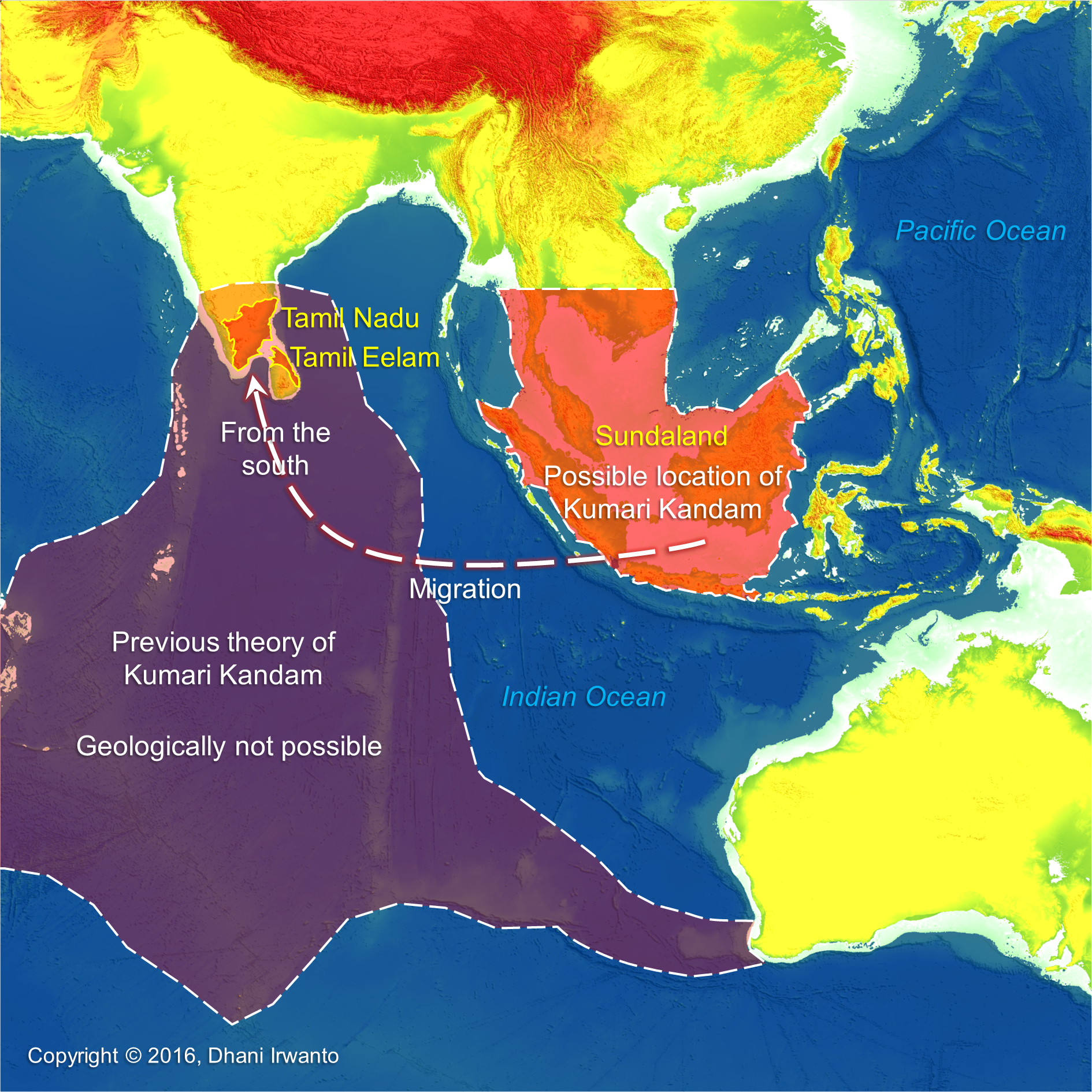
The legend states that Kumari Kandam was submerged by a series of catastrophic floods, referred to as "Kadal Kol" in Tamil, meaning "ocean engulfment." This event is believed to have occurred thousands of years ago, forcing the Tamil people to migrate northward to present-day South India.
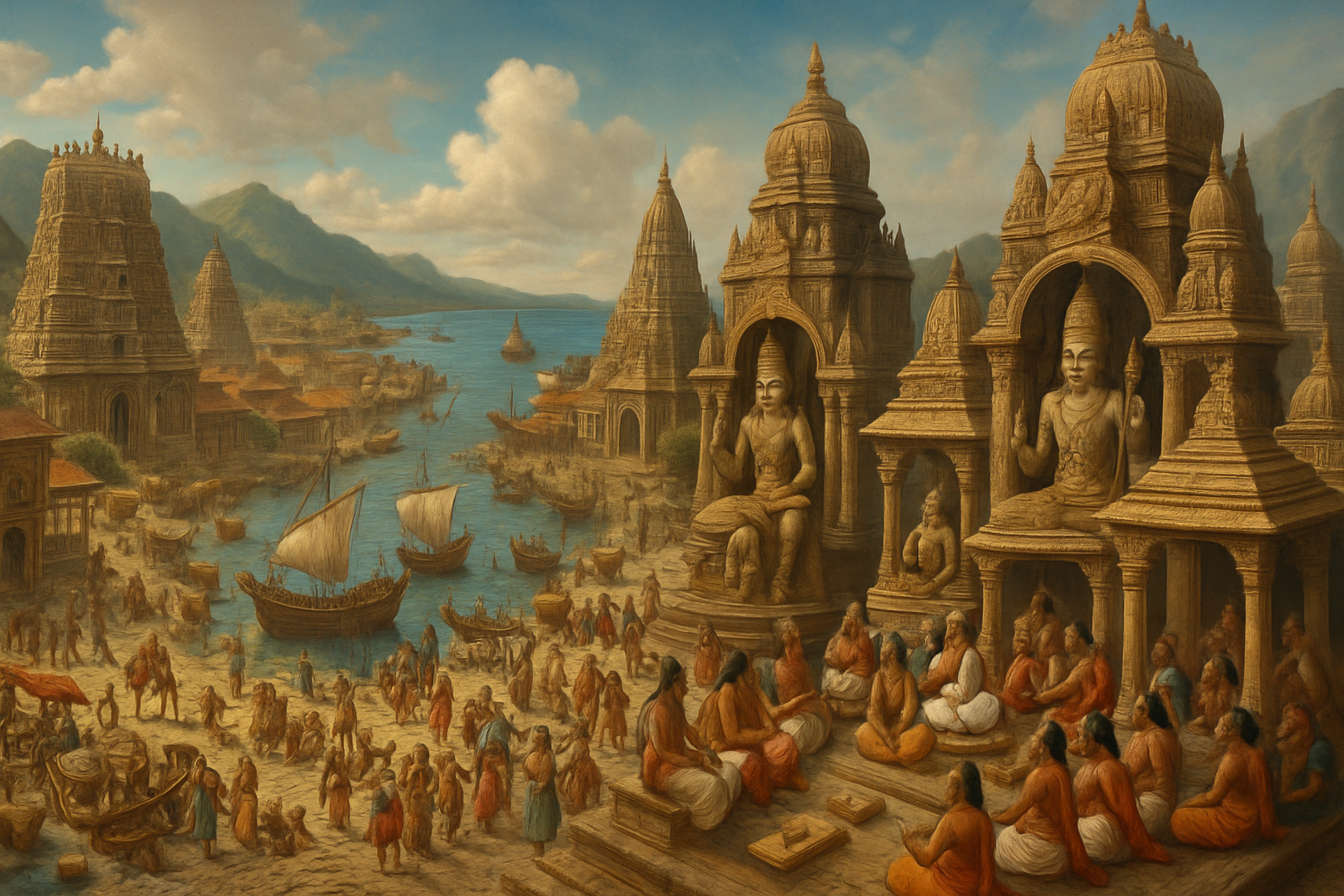
Artistic representation of Kumari Kandam civilization

Artistic representation of the ancient Kumari Kandam civilization

Historical Context

The concept of Kumari Kandam finds its earliest mention in the 15th-century Tamil religious epic, Kanda Puranam, written by Kachiappa Sivacharyara (1350–1420). Initially, it was linked to the mythical land of Lemuria by Tamil revivalists in the 19th century, as colonial India grappled with questions about the existence of a lost continent.

According to ancient Tamil texts, particularly Sangam literature, Kumari Kandam was ruled by the Pandyan kings who established three literary academies (Sangams). The first Sangam flourished for 4,400 years in a city called Thenmadurai (South Madurai), attended by 549 poets and presided over by gods like Shiva, Kubera, and Murugan. The second Sangam lasted for 3,700 years in a city called Kapatapuram. Both cities were eventually "seized by the ocean," resulting in the loss of all works created during the first two Sangams.

While modern geology does not support the existence of a sunken continent in the Indian Ocean, the legend of Kumari Kandam continues to hold significant cultural importance for Tamil people worldwide. It represents the antiquity and richness of Tamil civilization and serves as a symbol of Tamil cultural identity and pride.

Map of Kumari Kandam

A speculative map showing the possible extent of Kumari Kandam

Lord Murugan and Kumari Kandam

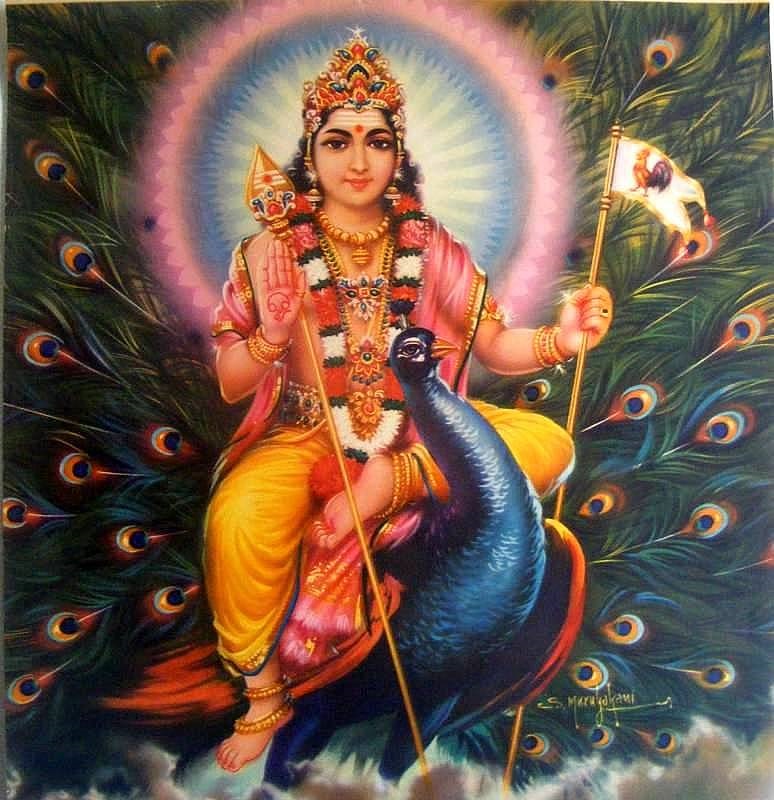
Lord Murugan (also known as Subramanya or Kartikeya) holds a special place in the mythology of Kumari Kandam. According to ancient Tamil texts, Lord Murugan lived during the period of Kumari Kandam and was considered both as a God and a forefather by the ancients of Kumari Kandam.

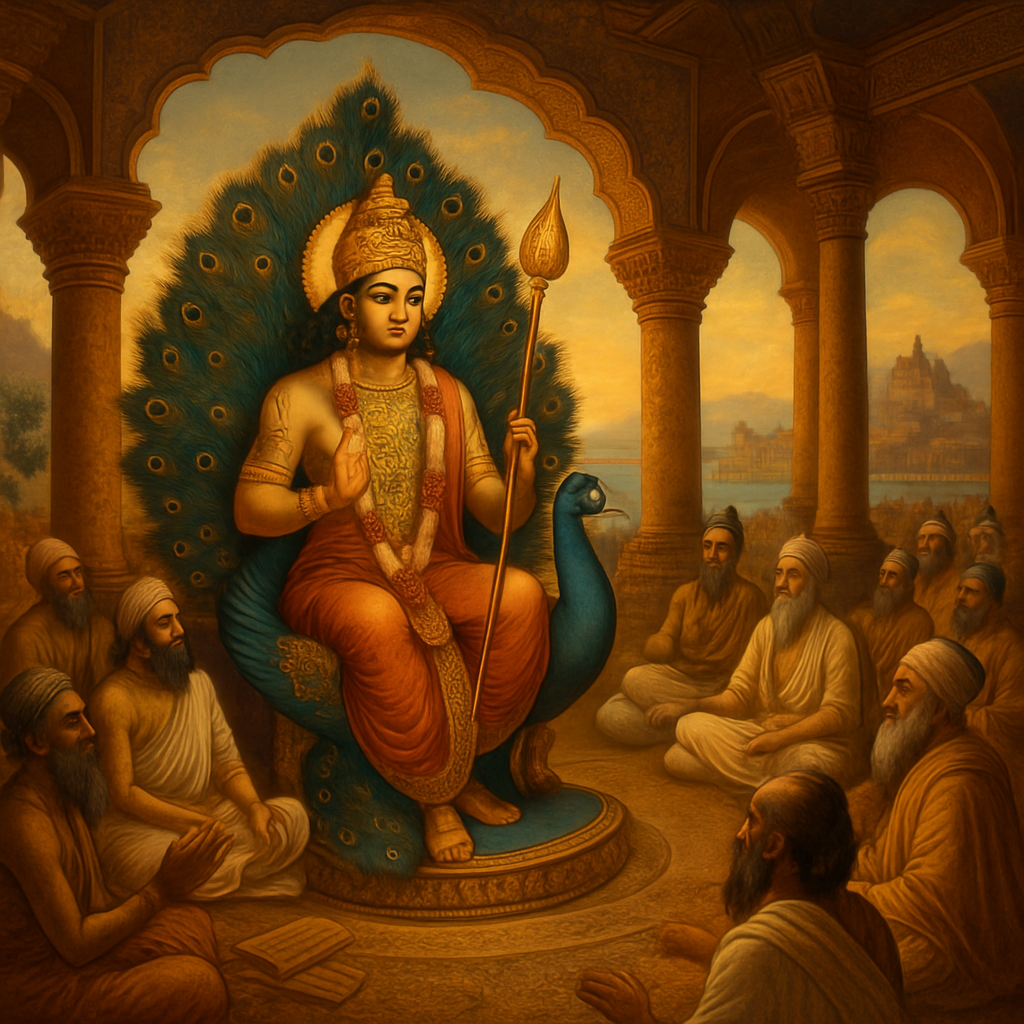
Lord Murugan is said to have presided over the First Sangam, the ancient Tamil literary academy that flourished in Kumari Kandam. Under his divine guidance, poets and scholars created works of profound wisdom and beauty, establishing the foundations of Tamil literature and culture.

The connection between Lord Murugan and Kumari Kandam is further strengthened by the belief that he, along with Lord Shiva and Sage Agastya, is credited as one of the founders of the Tamil language. This divine association elevates the status of Tamil as a language of divine origin.

According to some traditions, Lord Murugan foresaw the deluge that would eventually submerge Kumari Kandam. To protect the esoteric wisdom of the civilization, he guided the people to secure their knowledge safely in many parts of the world before the catastrophe took place.

Lord Murugan presiding over the First Sangam

Artistic representation of Lord Murugan presiding over the First Sangam in Kumari Kandam

Deities Worshiped in Kumari Kandam

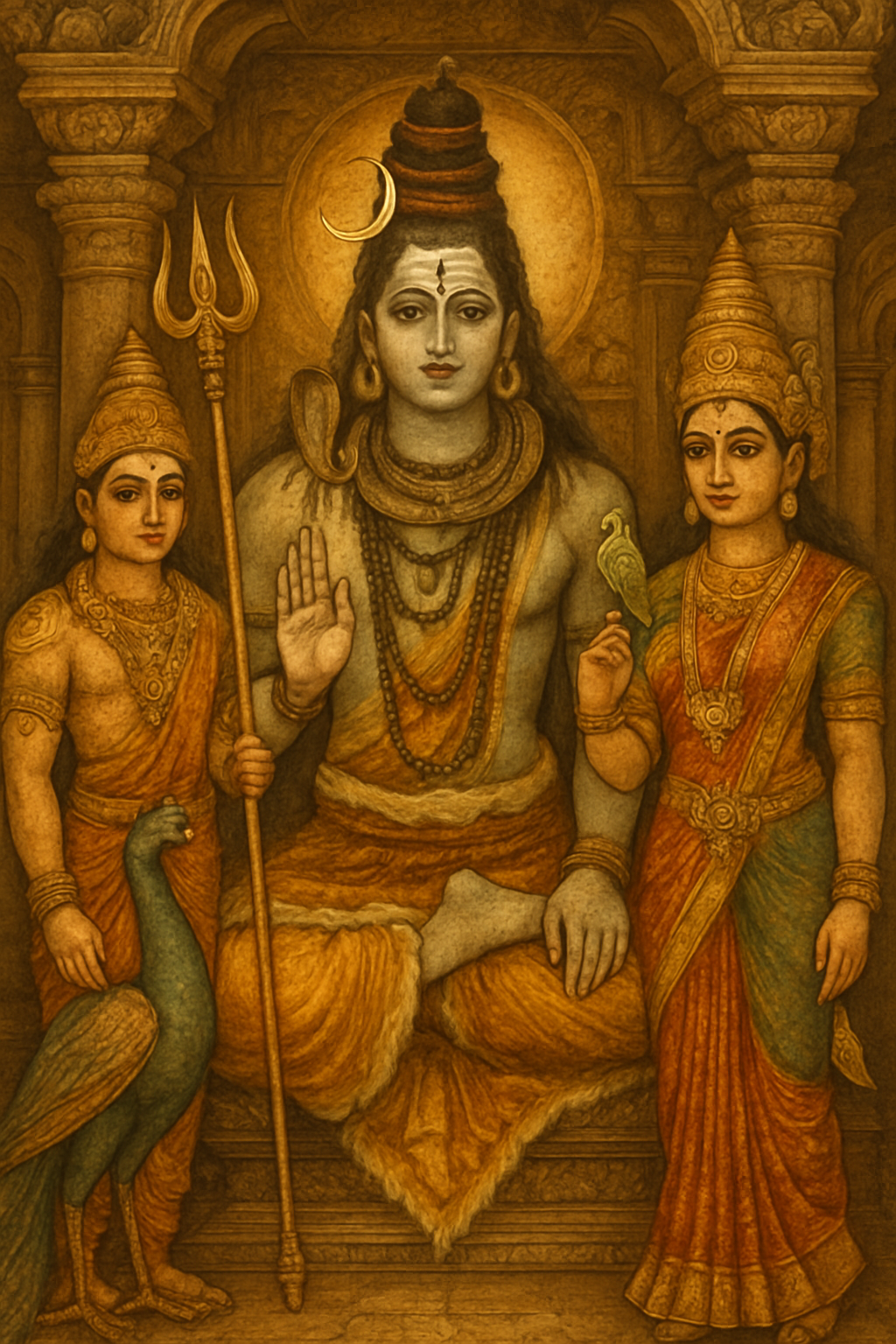
The people of Kumari Kandam worshiped several deities, with the primary gods being Shiva, Murugan, and Minakshi. These deities continue to be central to Tamil religious practices today, showing the continuity of cultural and spiritual traditions from ancient times.

Lord Shiva

Lord Shiva was one of the principal deities worshiped in Kumari Kandam. As the destroyer and transformer in the Hindu trinity, Shiva was revered for his cosmic dance (Tandava) that symbolizes the cycle of creation, preservation, and dissolution. Archaeological findings suggest that Shiva worship was prevalent in Kumari Kandam, with temples dedicated to him found throughout the region.

Lord Murugan

Lord Murugan, the son of Shiva, was especially venerated in Kumari Kandam. Known as the god of war and victory, Murugan is depicted with a peacock as his mount and a vel (spear) as his weapon. He was considered the presiding deity of the hilly regions (Kuriñci) and was associated with youth, beauty, and wisdom.

Goddess Minakshi

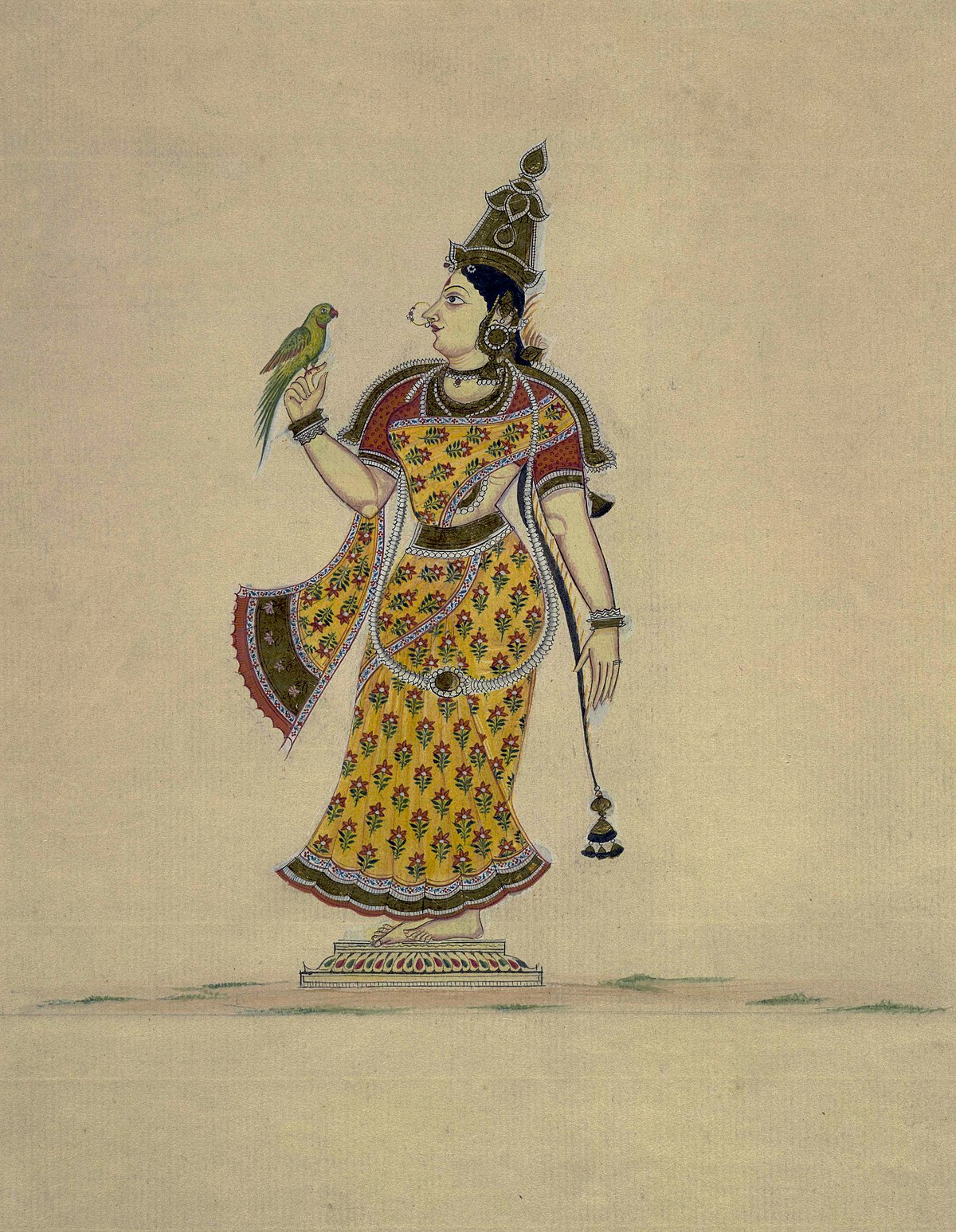
Goddess Minakshi, an avatar of Parvati and the consort of Shiva, was also widely worshiped in Kumari Kandam. Her name means "fish-eyed," symbolizing eyes that are perfect in shape like a fish. She is depicted as a warrior goddess who eventually became the queen of Madurai.

The worship of these deities in Kumari Kandam represents the synthesis of Tamil and Hindu religious traditions, showing how the two mythologies joined hands to create a rich spiritual tapestry that continues to influence Tamil culture today.

Deities worshiped in Kumari Kandam

Artistic representation of the main deities worshiped in Kumari Kandam: Shiva, Murugan, and Minakshi

Society and Culture

Kumari Kandam is described as a land of great wealth, prosperity, and advanced culture. The society of Kumari Kandam was highly sophisticated, with achievements in various fields including literature, arts, science, and governance.

Social Structure

The society of Kumari Kandam was known for its egalitarian values. Women enjoyed high status, with equal rights in education, property ownership, and social participation. The civilization was ruled by the Pandyan kings, who were known for their wisdom and just governance.

Economy and Trade

Kumari Kandam was an economic powerhouse with thriving agriculture, crafts, and maritime trade. The ports of Kumari Kandam were hubs of commerce, connecting the continent to other ancient civilizations across the world. Trade items included spices, pearls, textiles, and precious stones.

Arts and Literature

The literary achievements of Kumari Kandam were exemplified by the Sangam academies, where poets and scholars created works of profound wisdom and beauty. The First and Second Sangams, which were held in Kumari Kandam, produced literary works that were unfortunately lost when the continent was submerged.

Science and Technology

According to legends, the people of Kumari Kandam possessed advanced knowledge in various fields including mathematics, astronomy, medicine, and engineering. They had developed sophisticated systems of measurement, understood complex mathematical concepts, and had insights into physics and natural phenomena.

Spiritual Practices

The spiritual life of Kumari Kandam was rich and diverse, centered around the worship of deities like Shiva, Murugan, and Minakshi. Temples were not just places of worship but also centers of learning, arts, and community gathering.

Map showing the extent of Kumari Kandam

A map showing the possible extent of Kumari Kandam and its relation to modern geography